
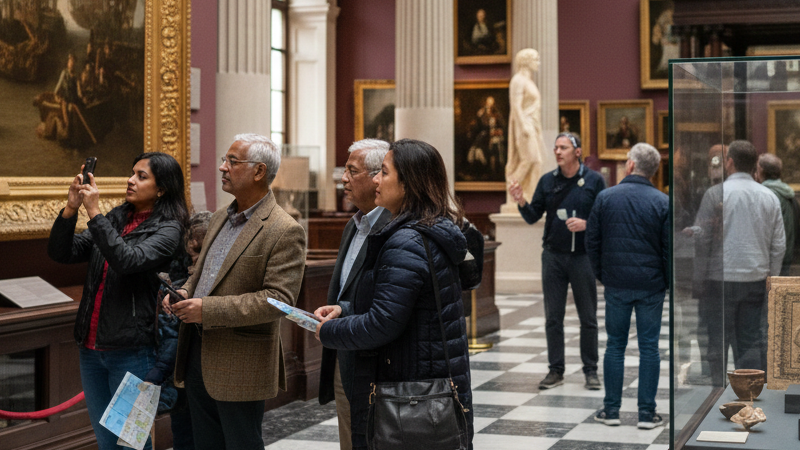
Una giornata in un museo: vocabolario e frasi in inglese
L’esperienza di una giornata in un museo (/ˈmjuːziəm/) è un’esperienza educativa che permette di esplorare la storia, l’arte e la scienza. Conoscere il vocabolario inglese dei musei ti permette di:
-
Parlare con guide o visitatori stranieri
-
Scrivere recensioni, diari di viaggio o post sui social
-
Arricchire il tuo inglese con termini culturali e storici
1. Termini chiave del museo
| Italiano | Inglese | Pronuncia | Esempio | Traduzione |
|---|---|---|---|---|
| Museo | Museum | /ˈmjuːziəm/ | We visited a famous museum in London. | Abbiamo visitato un museo famoso a Londra. |
| Opera d’arte | Artwork | /ˈɑːrtˌwɜːrk/ | This artwork is from the 18th century. | Questa opera d’arte è del XVIII secolo. |
| Mostra | Exhibition | /ˌɛksɪˈbɪʃən/ | The exhibition focuses on Renaissance paintings. | La mostra è incentrata sui dipinti del Rinascimento. |
| Collezione | Collection | /kəˈlɛkʃən/ | The museum has a large collection of sculptures. | Il museo ha una grande collezione di sculture. |
| Scultura | Sculpture | /ˈskʌlpʧər/ | The sculpture is made of bronze. | La scultura è fatta di bronzo. |
| Dipinto | Painting | /ˈpeɪntɪŋ/ | The painting is very detailed. | Il dipinto è molto dettagliato. |
| Fotografia | Photograph | /ˈfoʊtəɡræf/ | The photograph shows the city in 1920. | La fotografia mostra la città nel 1920. |
| Guida | Guide | /ɡaɪd/ | The guide explained the history of the museum. | La guida ha spiegato la storia del museo. |
| Biglietto | Ticket | /ˈtɪkɪt/ | We bought tickets for the new exhibition. | Abbiamo comprato i biglietti per la nuova mostra. |
| Audioguida | Audio guide | /ˈɔːdioʊ ɡaɪd/ | I listened to the audio guide to learn more. | Ho ascoltato l’audioguida per saperne di più. |
| Storia | History | /ˈhɪstəri/ | The museum tells the history of the city. | Il museo racconta la storia della città. |
| Arte contemporanea | Contemporary art | /kənˈtɛmpərəri ɑːrt/ | The museum has a contemporary art section. | Il museo ha una sezione di arte contemporanea. |
| Arte moderna | Modern art | /ˈmɒdərn ɑːrt/ | We visited the modern art exhibition. | Abbiamo visitato la mostra di arte moderna. |
| Archeologia | Archaeology | /ˌɑːrkiˈɒlədʒi/ | The archaeology section is very interesting. | La sezione di archeologia è molto interessante. |
| Esplorare | To explore | /tuː ɪkˈsplɔːr/ | We explored the entire museum. | Abbiamo esplorato tutto il museo. |
2. Attività comuni in un museo
2.1 Visitare e osservare le opere
-
To walk around the museum (/tuː wɑːk əˈraʊnd ðə ˈmjuːziəm/) – camminare per il museo
-
We walked around the museum to see all the exhibits. – Abbiamo camminato per il museo per vedere tutte le esposizioni.
-
-
To admire an artwork (/tuː ədˈmaɪər ən ˈɑːrtˌwɜːrk/) – ammirare un’opera d’arte
-
I admired the detail in the Renaissance paintings. – Ammirai i dettagli nei dipinti del Rinascimento.
-
-
To read the description (/tuː riːd ðə dɪˈskrɪpʃən/) – leggere la didascalia
-
I read the description to understand the artist’s technique. – Leggo la didascalia per capire la tecnica dell’artista.
-
2.2 Partecipare a mostre ed eventi
-
To attend an exhibition (/tuː əˈtɛnd ən ˌɛksɪˈbɪʃən/) – partecipare a una mostra
-
We attended an exhibition of ancient artifacts. – Abbiamo partecipato a una mostra di reperti antichi.
-
-
To listen to a guide (/tuː ˈlɪsən tuː ə ɡaɪd/) – ascoltare la guida
-
The guide explained the history of each exhibit. – La guida ha spiegato la storia di ogni esposizione.
-
2.3 Scattare foto e prendere appunti
-
To take pictures (/tuː teɪk ˈpɪkʧərz/) – scattare foto
-
We took pictures of the most famous paintings. – Abbiamo scattato foto dei dipinti più famosi.
-
-
To take notes (/tuː teɪk noʊts/) – prendere appunti
-
I take notes about the style and history of each artwork. – Prendo appunti sullo stile e sulla storia di ogni opera.
-
3. Frasi utili per descrivere la giornata
-
The museum has an impressive collection of sculptures and paintings. (/ðə ˈmjuːziəm hæz ən ɪmˈprɛsɪv kəˈlɛkʃən əv ˈskʌlpʧərz ənd ˈpeɪntɪŋz/) – Il museo ha una collezione impressionante di sculture e dipinti.
-
I admired the brush strokes in this masterpiece. (/aɪ ədˈmaɪərd ðə brʌʃ stroʊks ɪn ðɪs ˈmɑːstərˌpiːs/) – Ammirai le pennellate in questo capolavoro.
-
The archaeology section is fascinating and informative. (/ði ˌɑːrkiˈɒlədʒi ˈsɛkʃən ɪz ˈfæsɪneɪtɪŋ ənd ɪnˈfɔːrmətɪv/) – La sezione di archeologia è affascinante e istruttiva.
-
We used the audio guide to learn more about each artwork. (/wiː juːzd ði ˈɔːdioʊ ɡaɪd tuː lɜːrn mɔːr əˈbaʊt iːʧ ˈɑːrtˌwɜːrk/) – Abbiamo usato l’audioguida per imparare di più su ogni opera.
-
After visiting the exhibits, we bought souvenirs at the museum shop. (/ˈæftər ˈvɪzɪtɪŋ ði ˈɛksɪbɪts wiː bɔːt ˈsuːvənɪərz æt ðə ˈmjuːziəm ʃɒp/) – Dopo aver visitato le esposizioni, abbiamo comprato dei souvenir nel negozio del museo.
4. Dialogo tipico in un museo
Anna e Luca visitano un museo
-
Anna: Hi Luca! Look at this sculpture. It’s so detailed! (/haɪ ˈluːkə lʊk æt ðɪs ˈskʌlpʧər ɪts soʊ ˈdiːteɪld/) – Ciao Luca! Guarda questa scultura. È così dettagliata!
-
Luca: Wow! I admire the technique. It must have taken years to make. (/waʊ aɪ ədˈmaɪər ðə tɛkˈniːk ɪt mʌst hæv ˈteɪkən jɪərz tuː meɪk/) – Wow! Ammirai la tecnica. Deve averci voluto anni per realizzarla.
-
Anna: Let’s read the description to learn more about the artist. (/lɛts riːd ðə dɪˈskrɪpʃən tuː lɜːrn mɔːr əˈbaʊt ði ˈɑːrtɪst/) – Leggiamo la didascalia per saperne di più sull’artista.
-
Luca: After that, we can attend the modern art exhibition. (/ˈæftər ðæt wiː kæn əˈtɛnd ðə ˈmɒdərn ɑːrt ˌɛksɪˈbɪʃən/) – Dopo possiamo partecipare alla mostra di arte moderna.
5. Consigli pratici
-
Impara prima i termini chiave del museo (museum, artwork, sculpture, painting…).
-
Usa le frasi pronte per descrivere ciò che vedi: admire, attend, explore, read, take notes.
-
Aggiungi aggettivi per rendere la descrizione più vivida: impressive, fascinating, detailed, contemporary, informative.
-
Prova a scrivere o raccontare la tua giornata in museo in inglese usando il vocabolario appreso.