
Prepositions of Time and Place: guida completa con esempi, pronuncia e esercizi
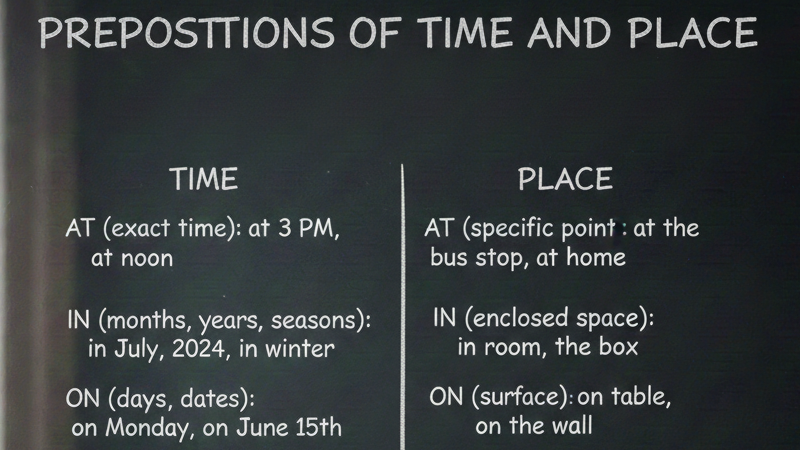
Le prepositions (/ˌprɛpəˈzɪʃənz/) sono parole che collegano nomi, pronomi o frasi a un’altra parte della frase, indicando tempo, luogo, direzione o relazione. In inglese, le preposizioni di tempo e luogo sono tra le più usate, ma spesso creano confusione per chi impara la lingua.
Example / Esempio:
-
I am at the station. (/aɪ æm æt ðə ˈsteɪʃən/) – Sono alla stazione.
-
We met on Monday. (/wiː mɛt ɒn ˈmʌndeɪ/) – Ci siamo incontrati lunedì.
Capire il corretto uso delle preposizioni è fondamentale sia per parlare fluentemente sia per scrivere testi chiari e naturali.
2. Prepositions of Time (preposizioni di tempo)
Le preposizioni di tempo più comuni sono in, on, at, by, for, since, during, until.
2.1 “In” – mesi, anni, periodi lunghi
-
Pronuncia: /ɪn/
-
Traduzione: in, dentro, durante
-
Usi principali: mesi, stagioni, anni, secoli, periodi lunghi
Esempi:
-
I was born in July. (/aɪ wəz bɔːrn ɪn ʤuːlaɪ/) – Sono nato a luglio.
-
She studied history in the 18th century. (/ʃiː ˈstʌdid ˈhɪstri ɪn ði ˈeɪtiˌnθ ˈsɛnʧəri/) – Ha studiato la storia nel XVIII secolo.
-
We often go on vacation in summer. (/wiː ˈɒfən ɡoʊ ɒn veɪˈkeɪʃən ɪn ˈsʌmər/) – Andiamo spesso in vacanza d’estate.
2.2 “On” – giorni, date specifiche
-
Pronuncia: /ɒn/
-
Traduzione: su, in (giorni, date)
-
Usi principali: giorni della settimana, date specifiche
Esempi:
-
The meeting is on Monday. (/ðə ˈmiːtɪŋ ɪz ɒn ˈmʌndeɪ/) – La riunione è lunedì.
-
My birthday is on the 5th of June. (/maɪ ˈbɜːrθdeɪ ɪz ɒn ðə fɪfθ əv ʤuːn/) – Il mio compleanno è il 5 giugno.
Espressione idiomatica:
-
On time (/ɒn taɪm/) – in orario
-
The train arrived on time. (/ðə treɪn əˈraɪvd ɒn taɪm/) – Il treno è arrivato in orario.
-
2.3 “At” – orari, momenti specifici
-
Pronuncia: /æt/
-
Traduzione: a, presso, in
-
Usi principali: orari precisi, momenti del giorno
Esempi:
-
The lesson starts at 9 a.m. (/ðə ˈlɛsən stɑːrts æt naɪn eɪ ˈɛm/) – La lezione inizia alle 9.
-
I usually drink coffee at breakfast. (/aɪ ˈjuːʒʊəli drɪŋk ˈkɒfi æt ˈbrɛkfəst/) – Di solito bevo il caffè a colazione.
Espressione idiomatica:
-
At the moment (/æt ðə ˈmoʊmənt/) – al momento
-
I can’t talk at the moment. (/aɪ kɑːnt tɔːk æt ðə ˈmoʊmənt/) – Non posso parlare al momento.
-
2.4 “Since” e “For” – durata nel tempo
-
Since (/sɪns/) indica l’inizio di un periodo
-
For (/fɔːr/) indica la durata totale
Esempi:
-
I have lived here since 2010. (/aɪ hæv lɪvd hɪər sɪns ˌtwɛnti ˈtɛn/) – Vivo qui dal 2010.
-
She has been studying English for three years. (/ʃiː hæz bɪn ˈstʌdiɪŋ ˈɪŋɡlɪʃ fɔːr θriː jɪərz/) – Studia inglese da tre anni.
3. Prepositions of Place (preposizioni di luogo)
Le preposizioni di luogo indicano dove si trova qualcosa o qualcuno. Le più comuni sono in, on, at, under, next to, between, among, behind, in front of.
3.1 “In” – dentro, all’interno
-
Pronuncia: /ɪn/
-
Traduzione: dentro
-
Esempi:
-
The keys are in the drawer. (/ðə kiːz ɑːr ɪn ðə drɔːər/) – Le chiavi sono nel cassetto.
-
She lives in London. (/ʃiː lɪvz ɪn ˈlʌndən/) – Vive a Londra.
3.2 “On” – sopra una superficie
-
Pronuncia: /ɒn/
-
Traduzione: su
-
Esempi:
-
The book is on the table. (/ðə bʊk ɪz ɒn ðə ˈteɪbəl/) – Il libro è sul tavolo.
-
There is a picture on the wall. (/ðeər ɪz ə ˈpɪkʧər ɒn ðə wɔːl/) – C’è un quadro sul muro.
3.3 “At” – luogo preciso o indirizzo
-
Pronuncia: /æt/
-
Traduzione: a, presso
-
Esempi:
-
I am at the bus stop. (/aɪ æm æt ðə bʌs stɒp/) – Sono alla fermata dell’autobus.
-
Meet me at 123 Main Street. (/miːt miː æt wʌn tuː θriː meɪn striːt/) – Incontriamoci al numero 123 di Main Street.
3.4 Altre preposizioni comuni
-
Under (/ˈʌndər/) – sotto
-
The cat is under the table. (/ðə kæt ɪz ˈʌndər ðə ˈteɪbəl/) – Il gatto è sotto il tavolo.
-
-
Next to (/nɛkst tuː/) – accanto
-
The bank is next to the post office. (/ðə bæŋk ɪz nɛkst tuː ðə poʊst ˈɒfɪs/) – La banca è accanto all’ufficio postale.
-
-
Between (/bɪˈtwiːn/) – tra due elementi
-
Among (/əˈmʌŋ/) – tra più elementi
-
Behind (/bɪˈhaɪnd/) – dietro
-
In front of (/ɪn frʌnt əv/) – davanti a
4. Esercizi pratici svolti
4.1 Completa con in/on/at
-
I was born ___ May. → in May (/ɪn meɪ/)
-
The meeting is ___ Monday. → on Monday (/ɒn ˈmʌndeɪ/)
-
I will see you ___ 6 p.m. → at 6 p.m. (/æt sɪks piː ɛm/)
4.2 Completa con since/for
-
I have lived here ___ 2015. → since 2015 (/sɪns ˌtwɛnti ˈfɪfˌtiːn/)
-
She has been studying English ___ three years. → for three years (/fɔːr θriː jɪərz/)
4.3 Completa con prepositions of place
-
The cat is ___ the table. → under (/ˈʌndər/)
-
The book is ___ the shelf. → on (/ɒn/)
-
Meet me ___ the station. → at (/æt/)
-
The post office is ___ the bank. → next to (/nɛkst tuː/)
5. Consigli pratici
-
Associa in/on/at a concetti concreti: in = dentro, on = sopra, at = punto preciso.
-
Usa le preposizioni di tempo con segnali temporali chiari (month, day, hour).
-
Impara le frasi idiomatiche: “at the moment”, “on time”, “in the morning”.
-
Esercitati scrivendo frasi tue e controllando con esempi simili.